What are Eigenvectors?
Getting a better understanding
Topics Covered
- Definition and Meaning
- Problem 1: A matrix that scales everything
- Eigenvectors Are Rare
- Problem 2: Finding an eigenvector with no computation
- All Possible Eigenvector Arrangements
- Conclusion
In studying something, it often helps to start with its definition.
Definition of an Eigenvector
An eigenvector for a linear operator with matrix , is a non-zero vector such that:
for some .
What does the definition mean?
This means that the matrix is scaling . This means stretching, shrinking, or sometimes even reflecting to go in the opposite direction.
Problem 1: Finding a Matrix that Scales Everything
Find the right entries for the matrix such that scales every input by Follow the pictures and descriptions below.
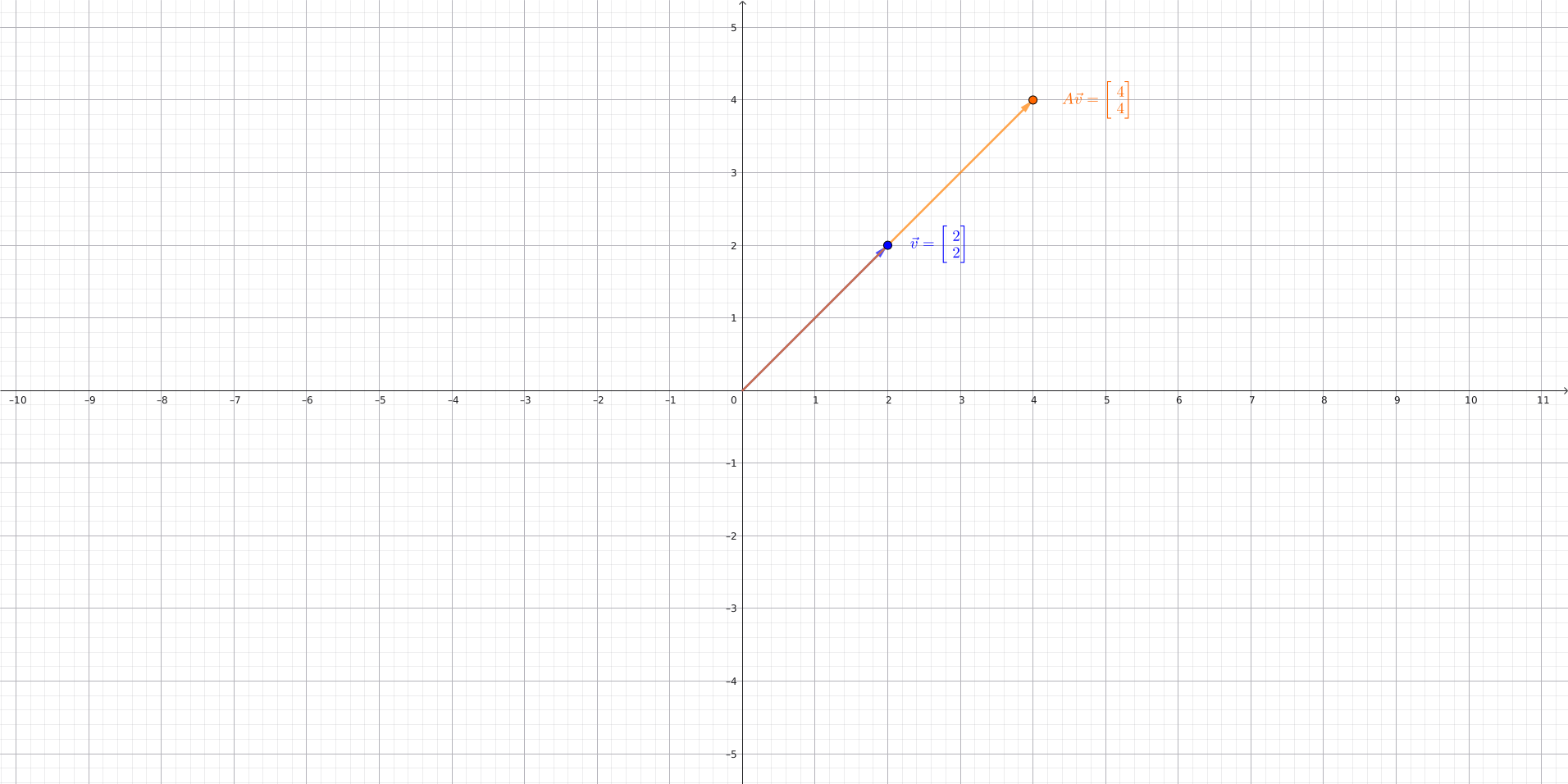
When you have the right matrix entries, enter them here.
Eigenvectors are Rare
Most vectors you put into most matrices do not come out parallel to themselves. Eigenvectors are the exception.
Example 1: A matrix with no eigenvectors
The matrix has no eigenvectors. See some examples for yourself below. In the last frame you can drag the vector around and confirm. There is a fixed, non-zero angle between every vector and its image.
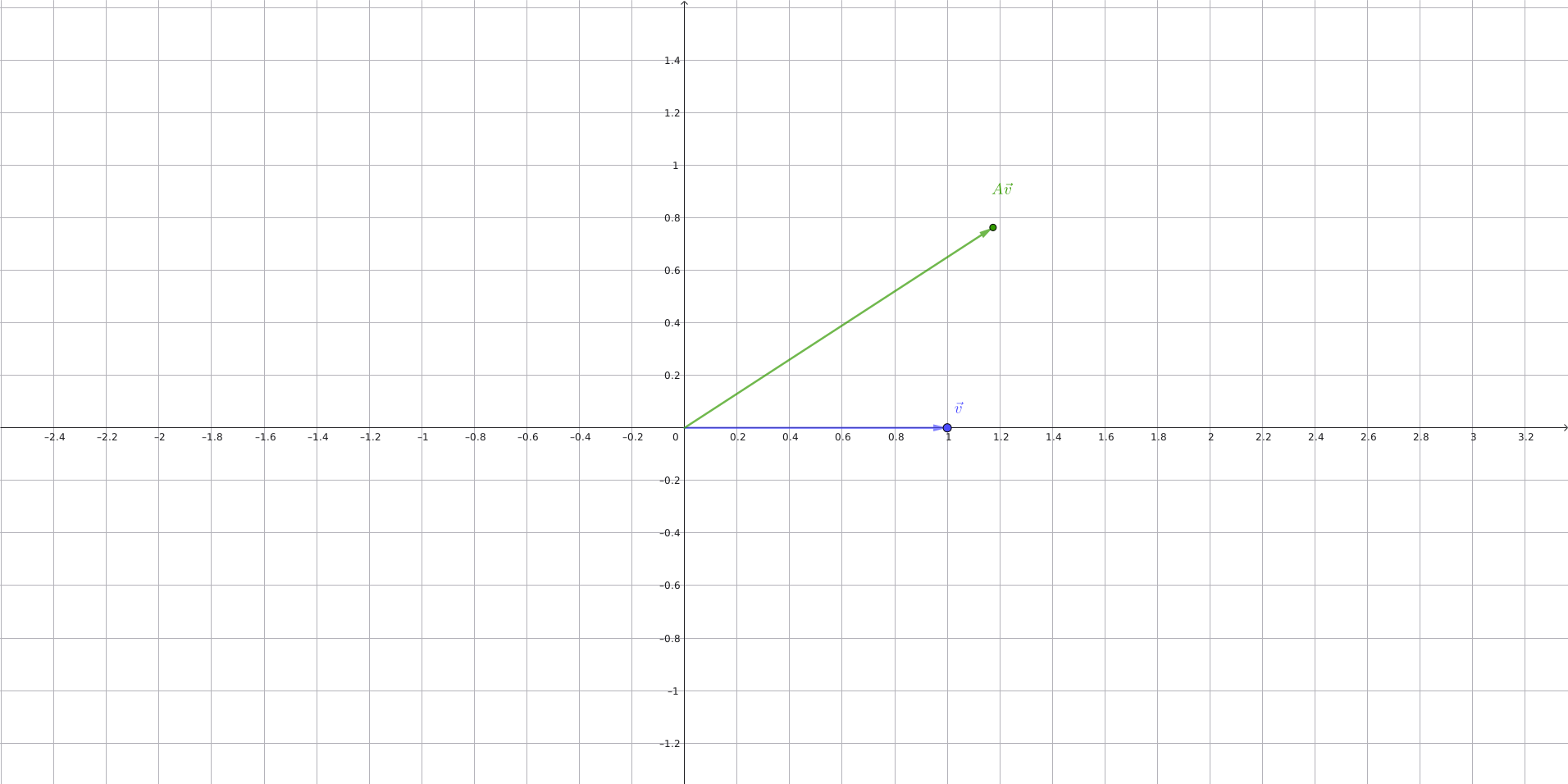
Fun fact: Every 2x2 matrix with no eigenvectors like this one is multiplication by a complex number.
Example 2: Axes Only
In this example is a diagonal matrix. The x-axis and y-axis are comprised of eigenvectors but nothing else.
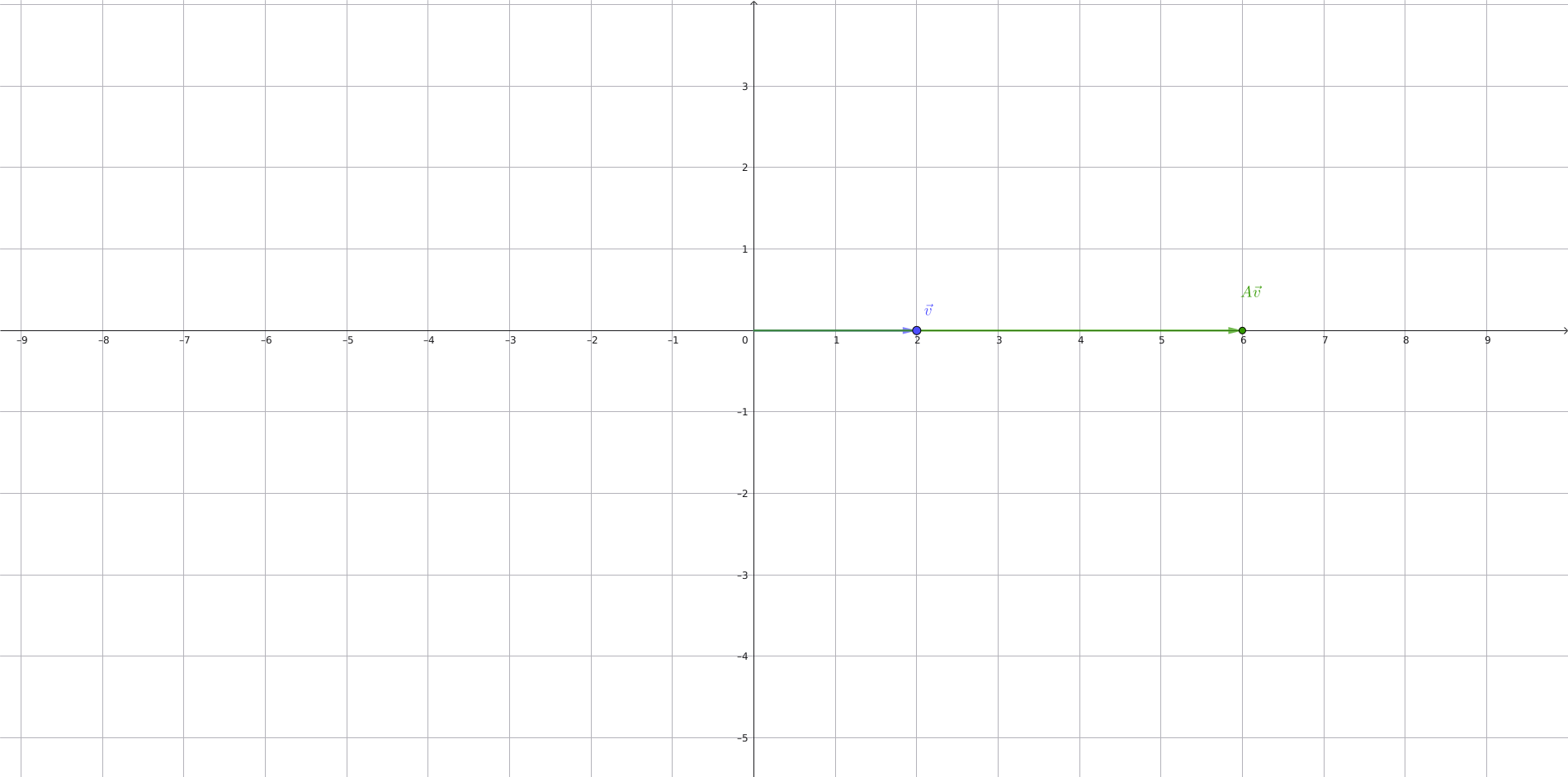
Fun fact: Most 2x2 matrices have two eigen-axes like these. But they may not be as easy to find as the x-axis and y-axis, and they may not even be perpendicular to each other.
Problem 2: Finding an Eigenvector with no computation
Below is a linear transformation given by an unknown 2x2 matrix.
Enter the eigenvector you found below.
Recap: All Possible Eigenvector Arrangements
The very first example you saw consisted of a matrix with the same values on the diagonal:
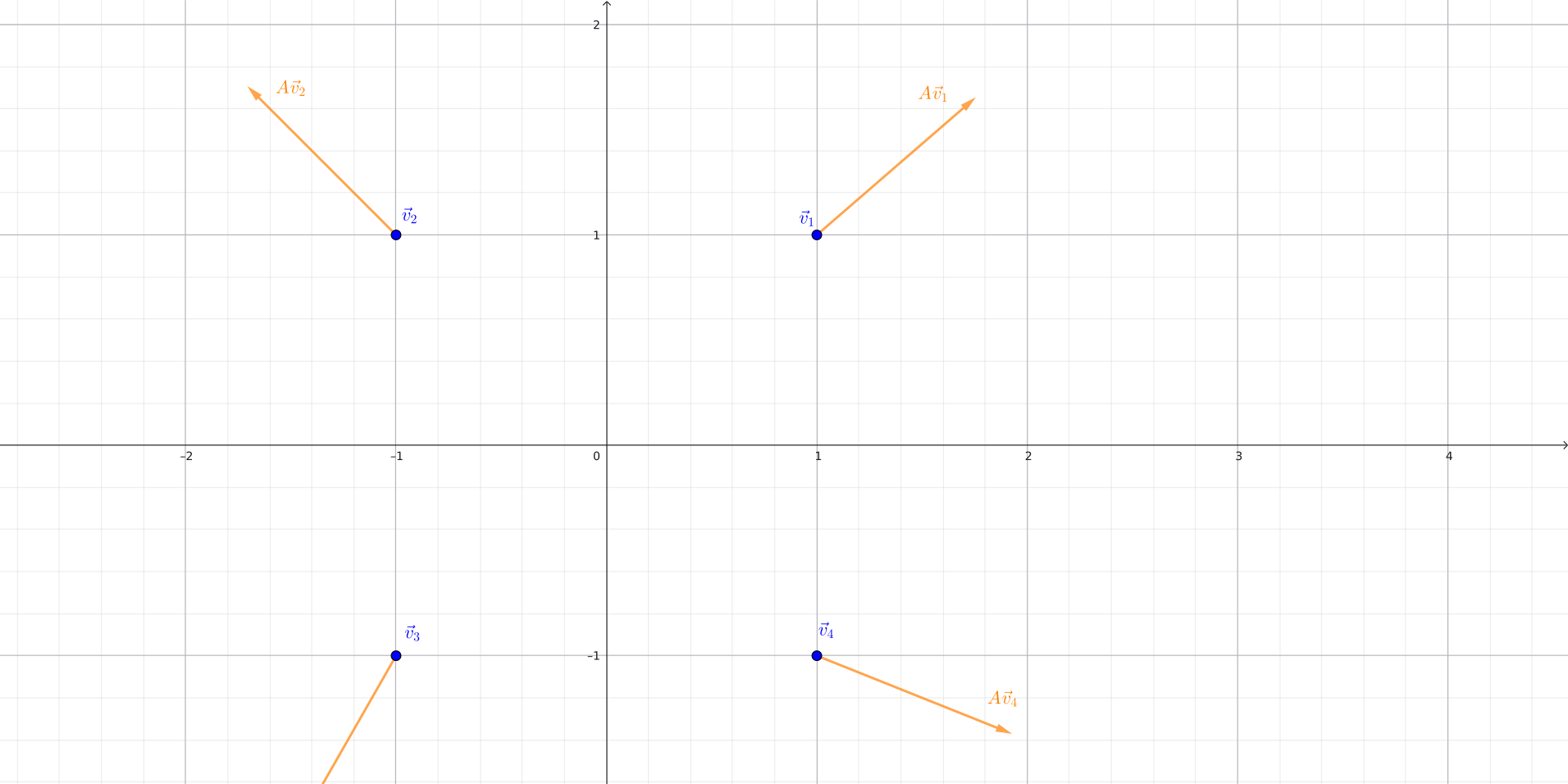
These are the only matrices where every non-zero vector is an eigenvector. For every other kind of matrix we either get eigen-axes or no eigenvectors at all. I would like to show you a visualization for each type, but first we need to tweak the way we see these vectors a little bit. Instead of every vector coming from the origin, we will just represent as a point. The image, , will be a vector coming out of that point. This way we can look at lots of vector pairs at the same time.
Vector Scaling Issue
There is one small but important caveat for the pictures above: The orange output vectors were not scaled properly. Proper scaling would have quickly lead to giant orange overlapping vectors as we travelled out from the origin, since outputs are proportional to inputs when in the same direction. Each orange vector was displayed as a unit vector version of its self. For example, the two eigen axes is photo #4 above have different eigenvalues, but their arrows are all the same size.
- Question: Can you tell just from looking at the picture if those eigenvalues are positive or negative?
- Question: Which eigen-axis do you think has the bigger eigenvalue?
Fun fact: In higher dimensions, eigen-axes can become planes or even hyper-planes. The more general term of "eigenspace" is used.
Conclusion
You should now have a solid idea about what eigenvectors, eigenvalues, and eigen-axes look like for a 2x2 matrix.
These will play a key role in classifying and solving homogeneous first order linear systems of differential equations.
Next, we will cover the two big question that remain on the topic of eigenvectors.
- How are eigenvectors used?
- How they are computed?