DE Connection
Using Eigenvectors in Differential Equations
Topics Covered
- Eigenvectors of the Derivative
- Functions Are Vectors?
- A New way of Visualizing Vectors
- Connection to First Order Linear Systems
Eigenvectors of the Derivative
Eigenvectors of the derivative are functions of the form
We can verify this computationally:
But what does this mean? How is a vector?
Functions are vectors with an infinite number of components, and our traditional way of visualizing vectors no longer works with our traditional way of visualizing vectors once we have more than 3 components. So we'll adopt a different way of representing them visually:
Functions Are Vectors?
It is probably strange to think of functions as vectors. What would something like have to do with a column vector like ? I suspect that the perceived difference between these is the form in which we visualize them.
Too many components
The reason they seem different is because we can't visualize vectors with more than 3 components in the traditional way. Sure, vectors like these
can be plotted, where their entries are their and (and sometimes ) coordinates. But as soon as we need to plot a vector like
we run out of dimensions because there aren't enough axes to dedicate one axis to each component. Meanwhile, functions have an infinite number of components. So we will start with a new way to visualize column vectors that also for column vectors with more than 3 components.
A new way of visualizing Vectors
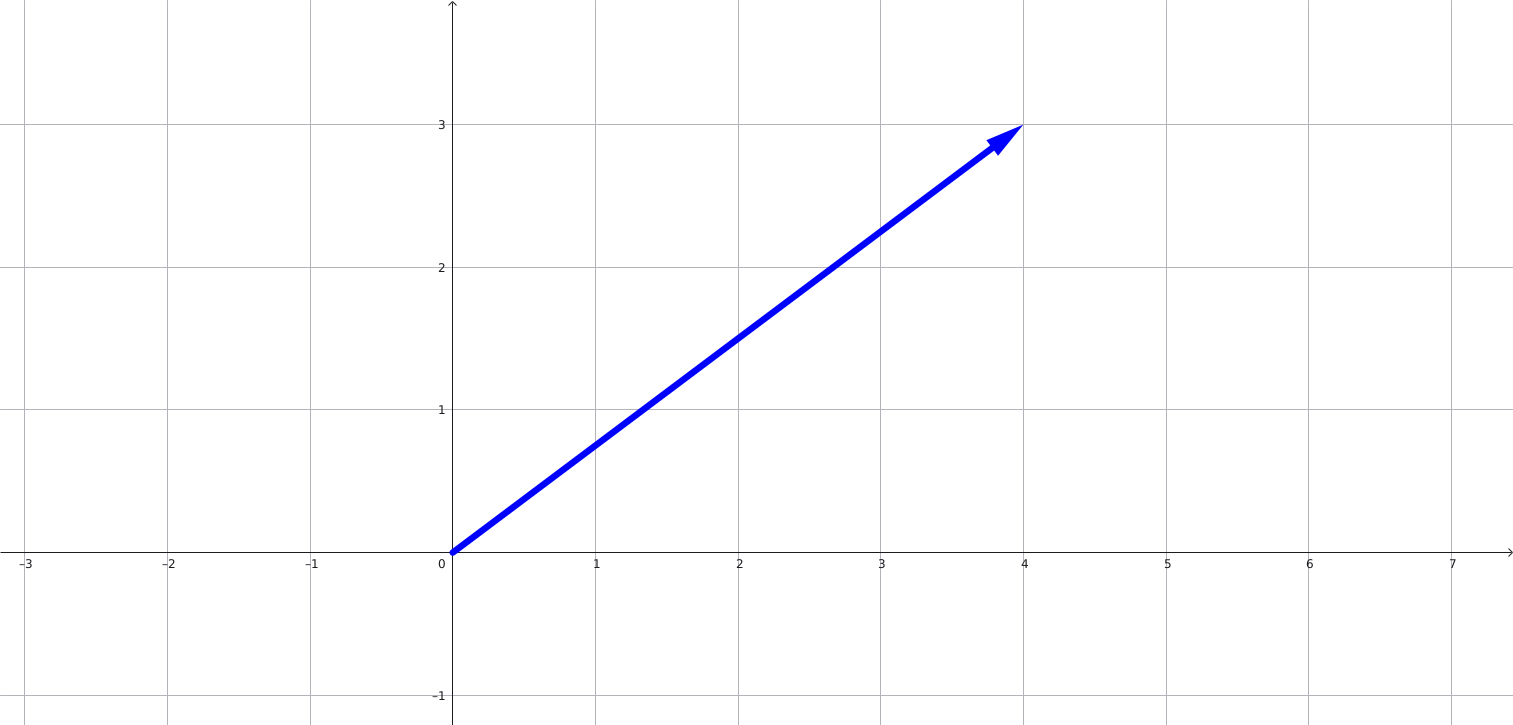
With this new way of visualizing vectors, any number of components can be visualized. This includes vectors with infinitely many components. Click through the buttons below to see for yourself.
Scaling Looks Different
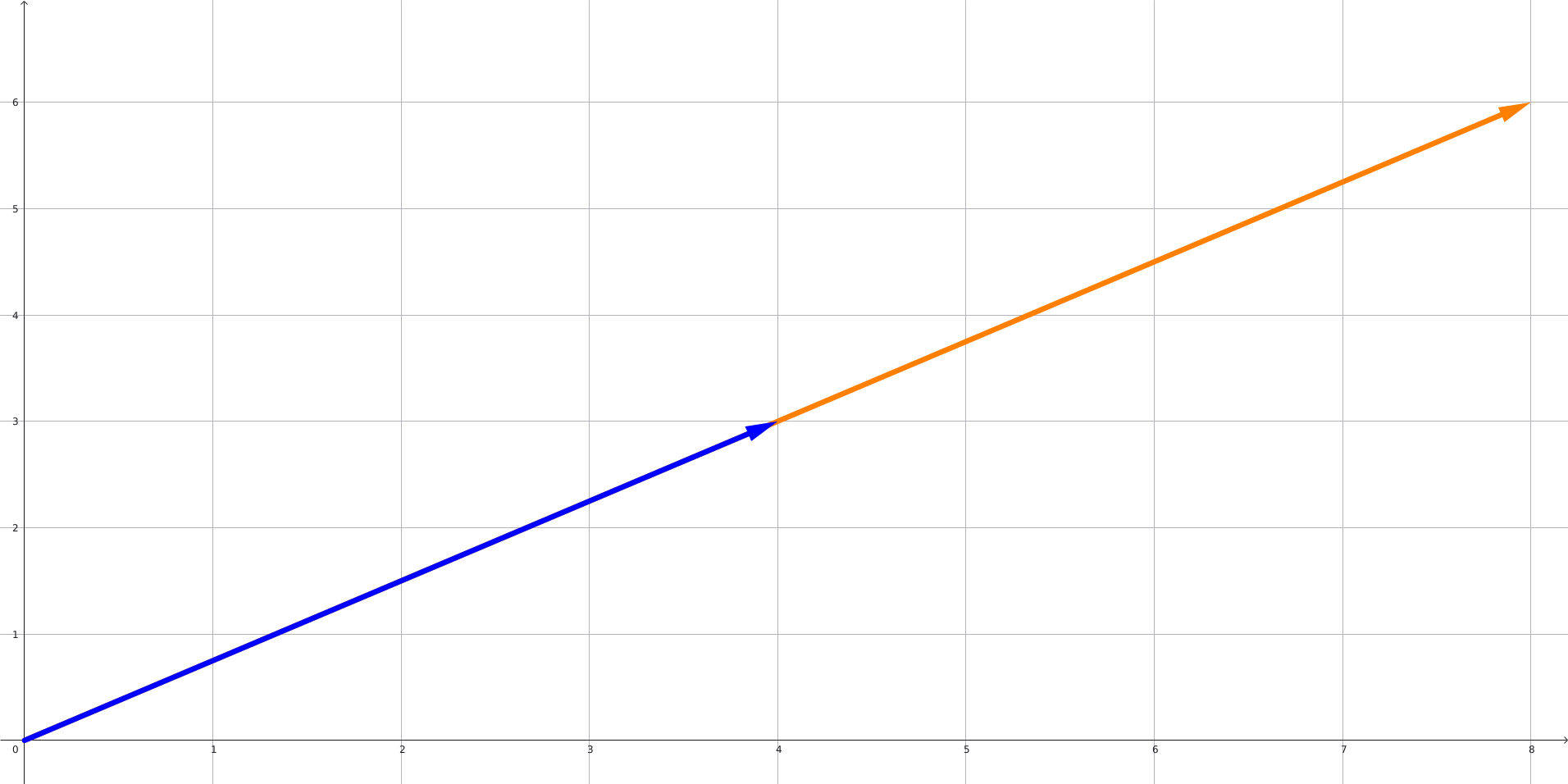
Scaling vectors with the old way of visualizing vectors makes them parallel but larger, smaller, or going in the opposite direction. On the other hand, scaling vectors with the new way of visualizing vectors makes all of the heights grow, shrink, or reflect on the -axis together.
Connection to First Order Linear Systems
Pairing an eigenvector of the derivative with an eigenvector of the matrix yields a solution of the first order system
The pairing looks like this:
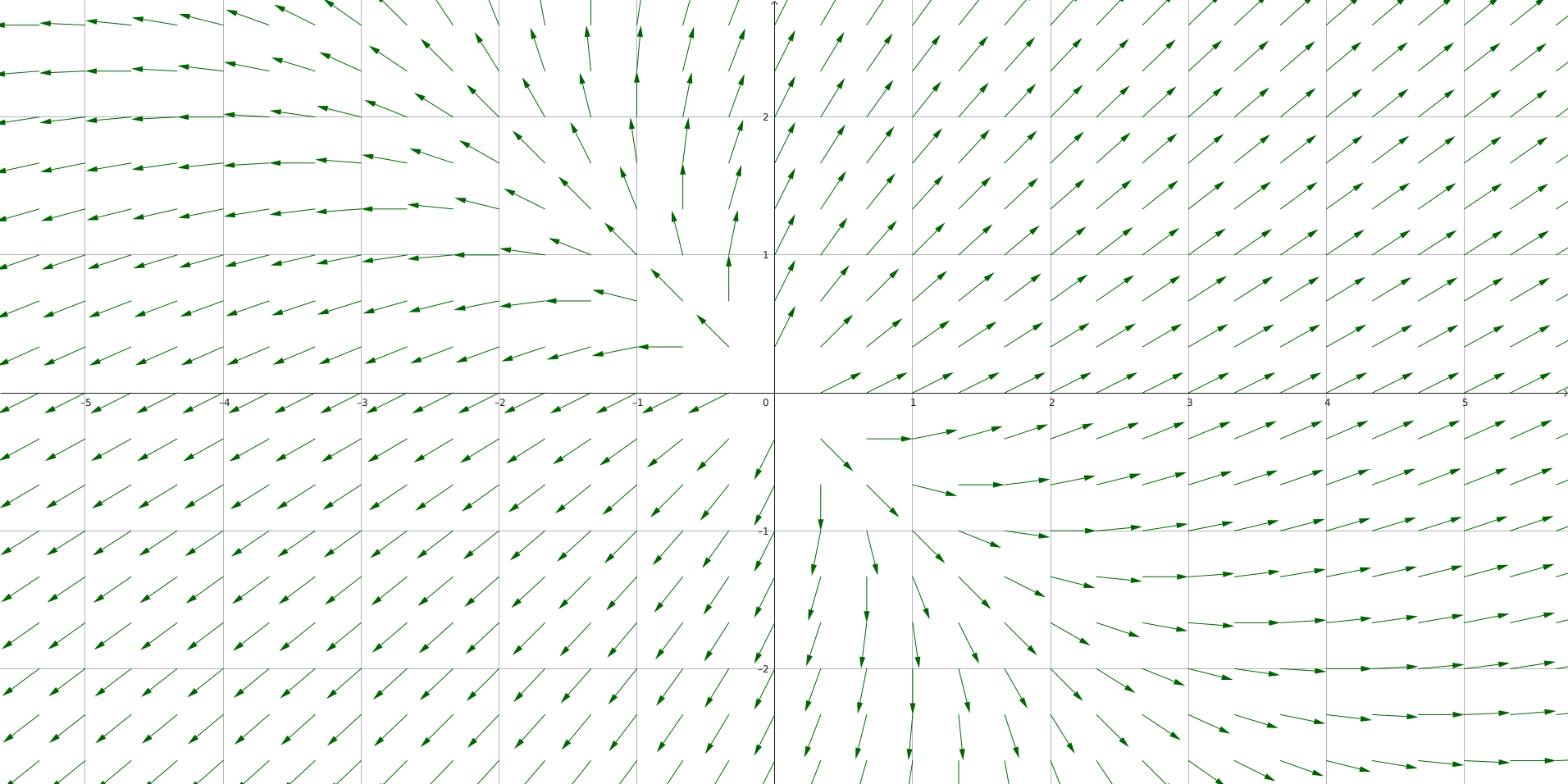
You can visit the first page on first order linear systems if you would like to get a better idea of how this works. Here is that page's first diagram to give you an idea about how the derivative and matrix align to determine the behavior of solution curves.
You can see more about that by clicking this link.
Introduction to First Order Linear Systems