Multi-variable Limits
Dealing with more than two directions
When we looked at limits for functions of the form , we only had two directions of approach: Left and right.
Even when we were looking at limits of curves, could only approach a point from before or after the time being considered. And these limits were very similar to the ones you learned in single-variable calculus.
But with a function like , we have infinitely many directions of approach. To set the scene, look at the pictures and read through their captions below.
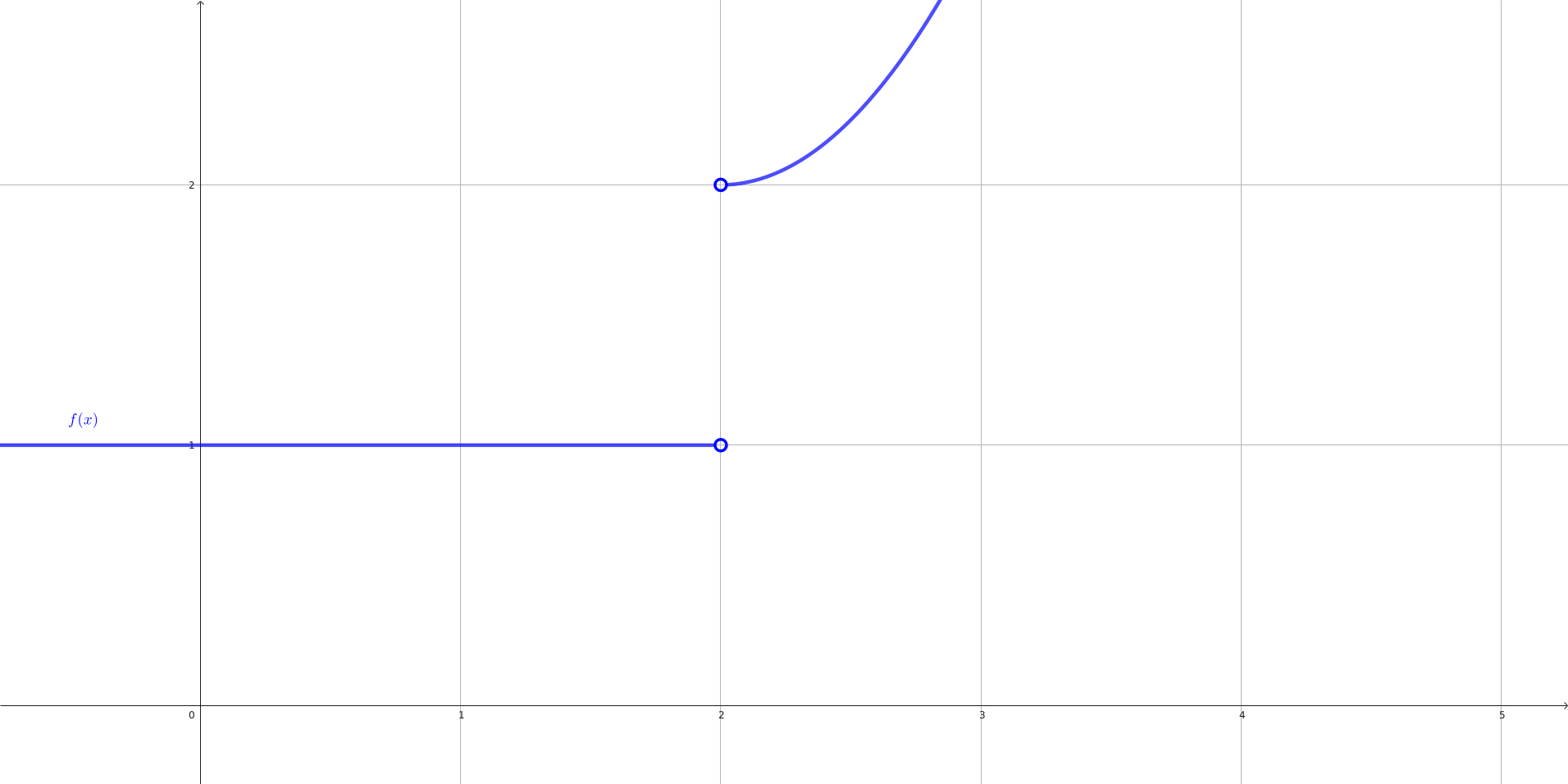
The train tracks you see do not cross because when they get to the point where they might cross, they are at different heights.
A Limit that Does Not Exist
Now imagine both of these train tracks are just on the ground. No bridges. No tunnels. But the ground could have hills, mountains, sand-dunes, or any other kind of bumpy terrain. Would it be possible for the train tracks to miss each other the way they did above?
Consider this example, where the terrain height is given by the function
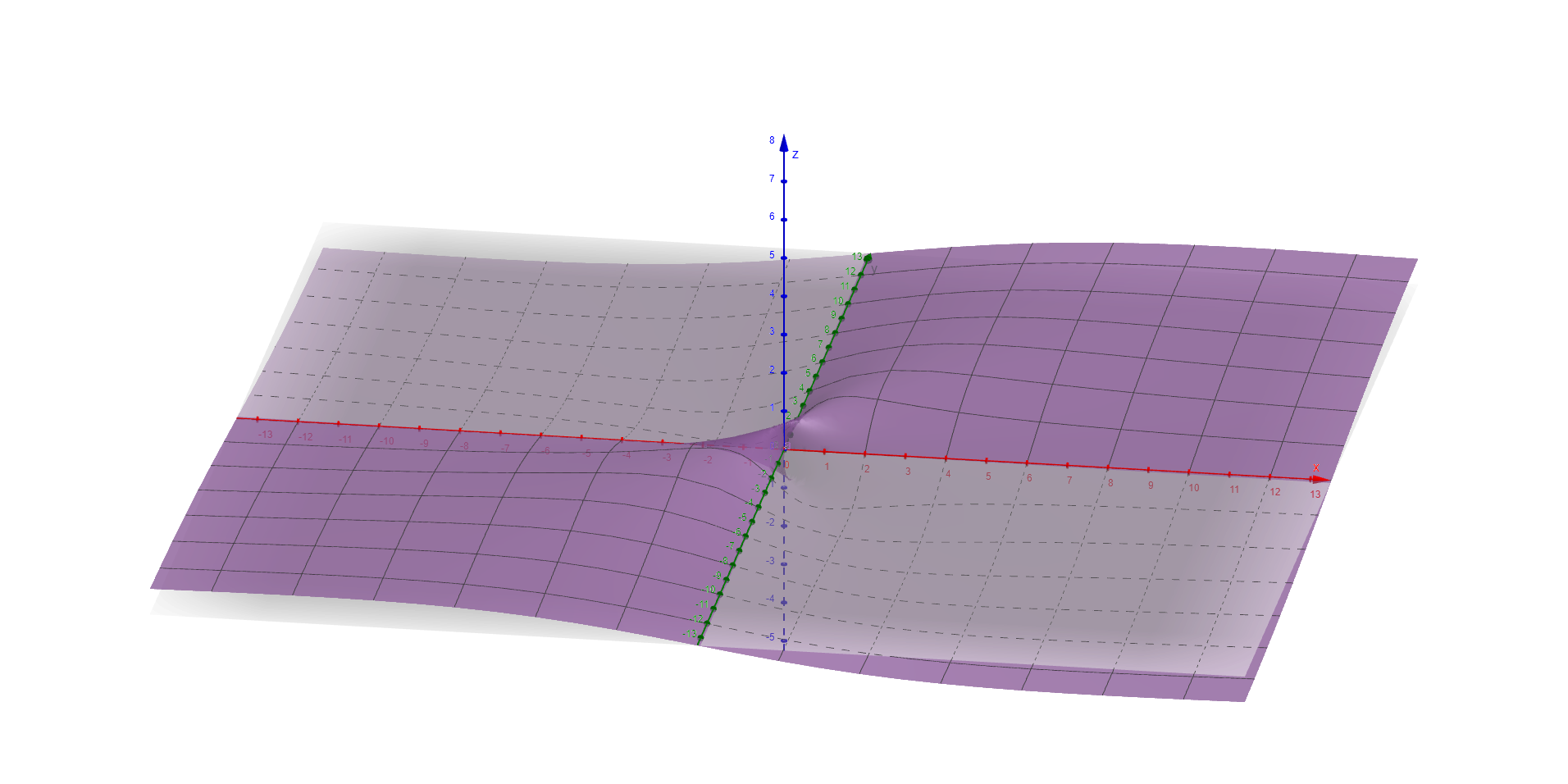
Because the points approached different heights as their directions changed, there is no limit at the origin. We can conclude by saying that the limit does not exist at the origin.